
One-Visit Root Canals in South Fort Worth
Experienced, Gentle Root Canal Therapy in a Single Visit
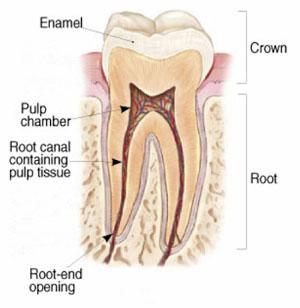 Root canal therapy is a way of saving an otherwise healthy tooth that has a deep-seated infection in the nerve (pulp). The doctor cleans out the inside of the tooth and then seals it off to prevent reinfection.
Dr. Warren is experienced at doing root canals and uses the most modern equipment to give you safe, effective and comfortable treatment.
What is Root Canal Therapy?
A root canal is the hollow space inside your tooth which contains the nerve or pulp. Root canal therapy is required when bacteria have invaded the root canal and the pulp is dying or dead and must be removed to save the tooth.
During a root canal procedure, the doctor will remove all of the infected pulp tissue, debris and bacteria from within the root canal. Once the canal is totally clean and free of bacteria, a safe, biocompatible dental compound is packed into the canal to seal it, so that new bacteria are not able to enter.
Infection from diseased root canals can spread to nearby tissues and cause pain, inflammation and abscesses that will eventually result in the tooth needing to be extracted. If the infection goes untreated, it could damage heart valves and cause other serious complications. Root canal therapy is a relatively simple procedure that can have far-reaching health benefits.
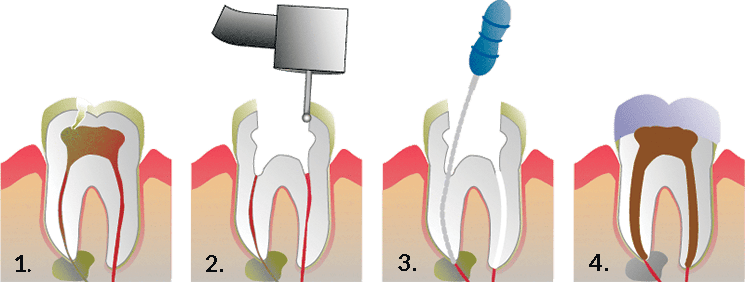
Root canal therapy is required when a tooth is infected or damaged (1). The top of the tooth is opened up to access the canals (2), pulp and nerve tissue are removed and the canals are cleaned (3), then the canals are sealed and the tooth is filled or covered with a crown (4).
Our One-Visit Root Canals
Dr. Warren is usually able to perform root canal therapy in just one office visit. He uses advanced technology to make sure your tooth is effectively cleaned and properly sealed, so that your tooth will last a long time. He uses a high-tech, gentle rotary instrument to accomplish the removal of dead nerve tissue and bacteria from the canal. He also uses an “apex locator” to assist him in finding the exact depth of each root canal for a safe, minimally invasive procedure.
Dr. Warren’s experience and gentle methods ensure that you will have a comfortable treatment. The majority of our patients experience little to no post-operative discomfort.
Signs That You Might Need Root Canal Therapy
- An abscess or pimple near your gumline
- Your tooth hurts when you bite down
- Tenderness at the bottom of the root
- Swelling of the gums
- Persistent pain
- Discoloration of the tooth
- Extreme sensitivity to heat and cold that continues after exposure
- Spontaneous pain with no apparent trigger
New Patient Special $89 Exam, X-rays & Consultation
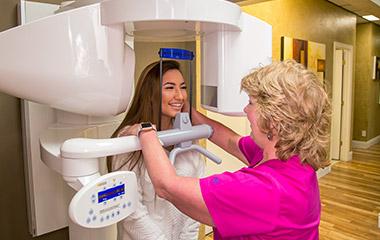 If you think you may need root canal treatment, come in and take advantage of our New Patient Special to receive a comprehensive oral exam, X-rays, consultation. You will receive:
- Exam
- Full set of X-rays
- Panoramic X-rays
- Oral cancer screening
- Consultation with the doctor
- Treatment options
- Get your questions answered
To make an appointment, call 817‑241‑2820 or click here to request an appointment online.